
Short version: Bring cash in small bills, one binder or box of cards you are willing to trade, spare sleeves and toploaders, and a want list with the most you would pay for each card. Charge your phone and save your list before you go, because convention halls often have bad signal.
Most of a good show day is decided the night before. Here is the whole list, then the order to do it in.
Money
- Cash in small bills. Plenty of tables are cash first, and exact money closes a deal faster than waiting on change.
- A card or phone payment as a backup, for vendors who take them.
- Your budget, written down. A number you decided at home is easier to stick to than one you decide at the fourth table.
Cards
- A trade binder or box with only the cards you will let go, sleeved and sorted so you can find one fast.
- Your best trade cards in toploaders or slabs, kept apart from the binder.
- Nothing from your personal collection unless you mean to trade it.
Know the condition of everything you bring. The card condition guide has the grades people use at a table, and it is better to call a card Lightly Played yourself than to have a vendor do it.
Supplies
- Penny sleeves and toploaders for what you pick up.
- A small box or team bags so new cards do not ride loose in a pocket.
- A bag that closes, a pen, water, a snack and comfortable shoes.
The storage guide covers which holder suits which card.
Your phone and your list
A want list is only useful if it says the price you are willing to pay. Write the set, the number, the printing and the grade next to each card. The same name can be a dozen different cards, and a vendor will price the one in front of you, not the one you meant. Look the cards up on the Pokémon card price pages the day before, so you know roughly where each one sits.
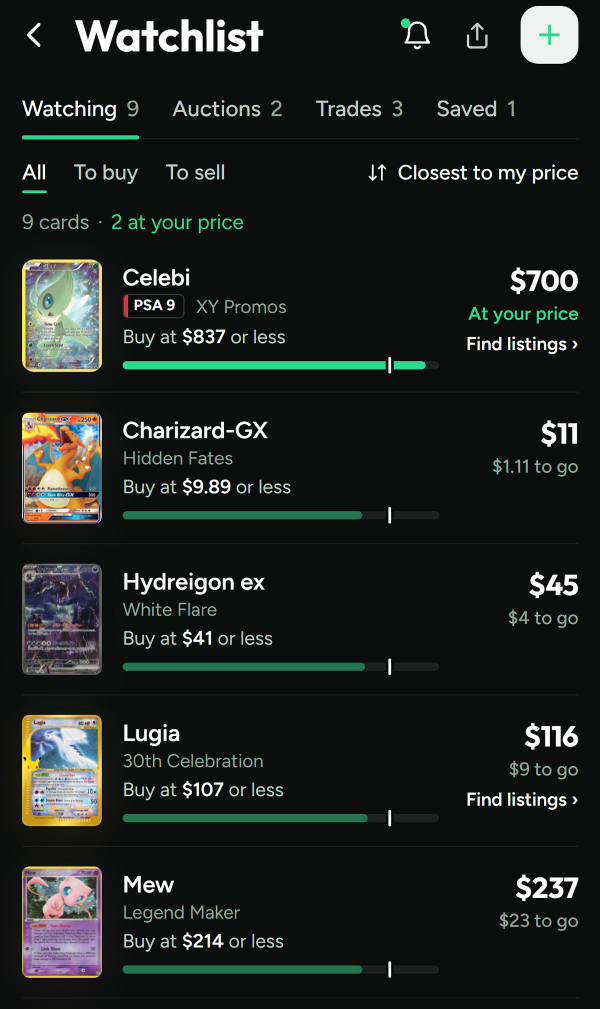
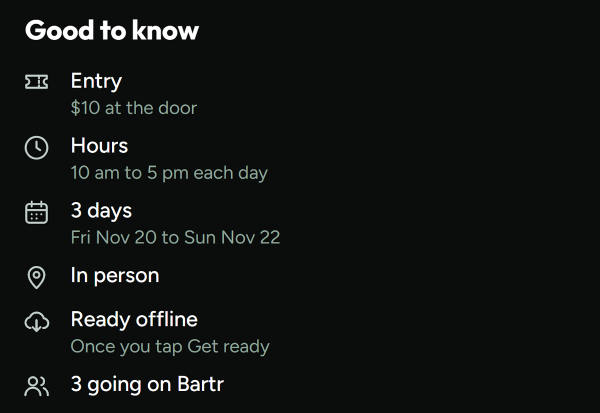
Then make the list work without signal. Screenshots do the job. In Bartr, tapping Get ready on a show saves your list to the phone, and the show page says Ready offline once it has.
The night before, step by step
1. Check the show details
Look up the hours, the entry fee and how many days it runs. Note when the doors open and whether there is early entry for vendors only.
2. Write your want list with prices
List the cards you are hunting with the set, the number, the printing and the grade, and the most you would pay for each.
3. Pull your trade stack
Pick the cards you are willing to let go, sleeve them, and put them in one binder or box. Leave the cards you will not trade at home.
4. Look up your best cards
Check recent sold prices for the cards that matter most on both lists, so a number at the table is not the first one you hear.
5. Pack cash, supplies and your phone
Small bills, spare sleeves and toploaders, a bag that closes, a battery pack, and a phone with your list saved for a hall with no signal.
Keep it all in one place
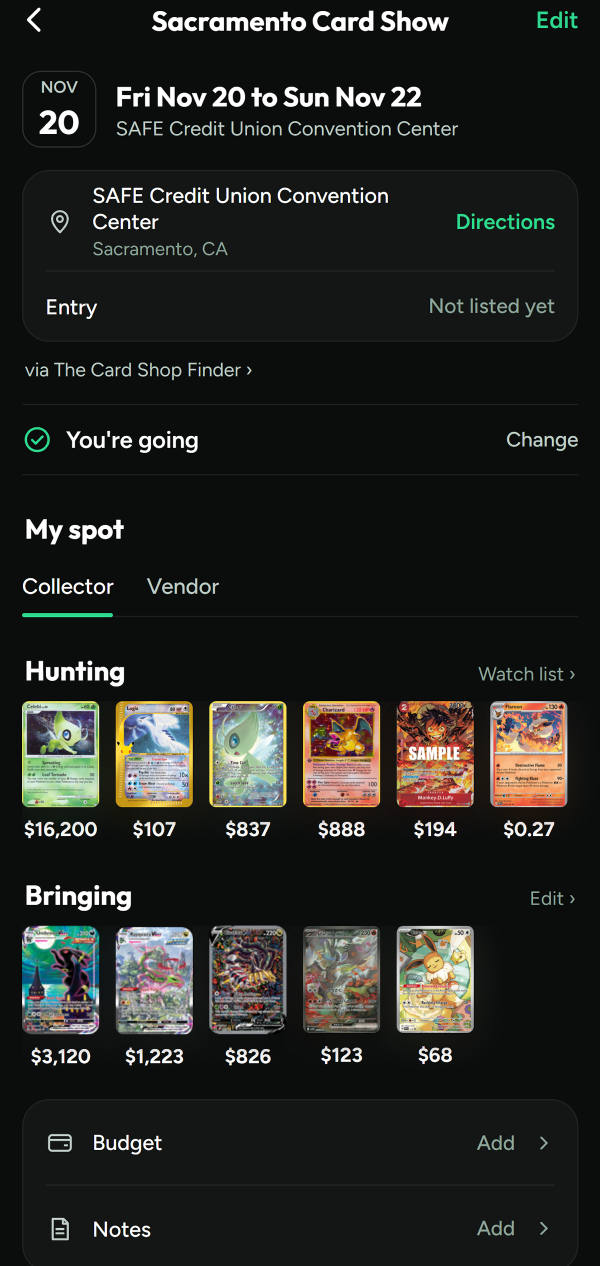
If you use Bartr, a show you mark yourself going to gets a My spot page. Hunting is your want list for that show, Bringing is your trade stack, and Budget and Notes sit under them. Reminders can go the night before and the morning of.
Going to your first one? Your first card show walks through the day itself.
Quick answers
How much cash should I bring to a card show?
Bring your budget, plus enough for entry and food, and stop when it is spent. Small bills make deals easier, because a vendor short on change is a deal that stalls.
Do card show vendors take cards or phone payments?
Many do and some are cash only. Bring cash anyway, since a card reader in a busy hall can be slow or lose signal.
What should I bring to trade at a card show?
Only cards you are happy to let go, sleeved and sorted in one binder or box. A short stack of cards people want trades faster than a big pile of bulk.
Should I bring my whole collection to a card show?
No. Bring your trade stack and your want list. Your personal collection is safer at home, and you will not trade a card you meant to keep in a rush.
Look up a card on the Pokémon card price pages or the One Piece card price pages, and read how Bartr prices cards. Bartr is an information tool, not financial advice.
Bartr keeps the list for you: your wants, the cards you are bringing, your budget and notes for each show, saved on your phone with a reminder the night before.
Get the app, or try the trade calculator in your browser first. Neither needs an account.