
Short version: Soft sleeve first, always. Then something rigid: a toploader for a single card, or a binder with side loading pockets for a set. Keep everything cool, dry and out of direct sunlight, and never try to clean a card.
Most wear happens in storage and handling, not in play, and condition is a large part of what a raw card is worth. All of this applies to Pokémon, One Piece, Riftbound and any other card game.
Soft sleeves
A soft sleeve, often called a penny sleeve, is a thin clear pocket that keeps fingerprints, dust and light scratches off the surface. Everything else on this page goes over one.
Hold the sleeve open and slide the card in gently, bottom edge first. Forcing a corner against the seam is how corners get dinged.
Toploaders, semi-rigids and magnetic cases
A toploader is a rigid plastic holder, open at the top, that stops a card from bending. Sleeve the card first, because a bare card can pick up surface scratches on the way in. They come in thicknesses. A standard one fits a normal card, and thicker cards or thicker sleeves need a deeper one. If you have to push, it's too tight.
A semi-rigid holder is thinner, more flexible and a little larger than the card. Grading companies often ask for cards to be sent in these, because the card comes out without anyone touching its edges. Check the grader's own instructions before you send anything. What grade will my card get? covers checking a card before it goes.
A magnetic holder is a hard two piece case that snaps shut around one card. It protects well and looks good on a shelf. Use the size made for your card's thickness, and make sure the card sits in the recess before you close it.
A team bag is a clear resealable bag that goes over a sleeved toploader. It keeps dust out and stops the card sliding out of the open top.
What to get
Bartr may earn a commission from these links.
As an Amazon Associate Bartr earns from qualifying purchases.
Each link opens a search in a new tab. What you find there, and the prices, are the seller's.
Binders
A binder is the nicest way to keep a set you want to look at. Go for side loading pockets, since cards slide out of top loading ones more easily. Look for pages described as PVC free and acid free. Some older soft plastics can stick to or mark cards over time.
In a ring binder, the pages near the rings can press on cards when it's closed, and a binder with fixed pages avoids that. One card per pocket, and stop before the binder bulges. Sleeving cards before they go in adds a layer, as long as the sleeved card still fits without force.
What to get
Bartr may earn a commission from these links.
As an Amazon Associate Bartr earns from qualifying purchases.
Each link opens a search in a new tab. What you find there, and the prices, are the seller's.
Boxes for bulk
Bulk does fine in cardboard storage boxes made for cards, stood on edge in rows, snug enough not to slump and loose enough to thumb through. Dividers by set or type make it far easier to find a card later. No rubber bands. They dent the edges and can stick as they age.
Where the collection lives
Somewhere dry. Humidity warps cards, and holo cards curl first, which rules out basements, bathrooms and anywhere near a window that gets condensation. Heat and big temperature swings are hard on cards too, so not the attic, the car or the spot next to a heater.
Direct sunlight fades ink over time. Display cards away from windows. Store stacks flat or upright, never leaning, because a stack that leans for months takes on a bend.
Handling
Wash and dry your hands. Hold a card by its edges and put it down on a clean soft surface, not a bare table. Don't clean, wipe or flatten a card. That usually adds marks, and buyers and graders look for them.
Graded cards
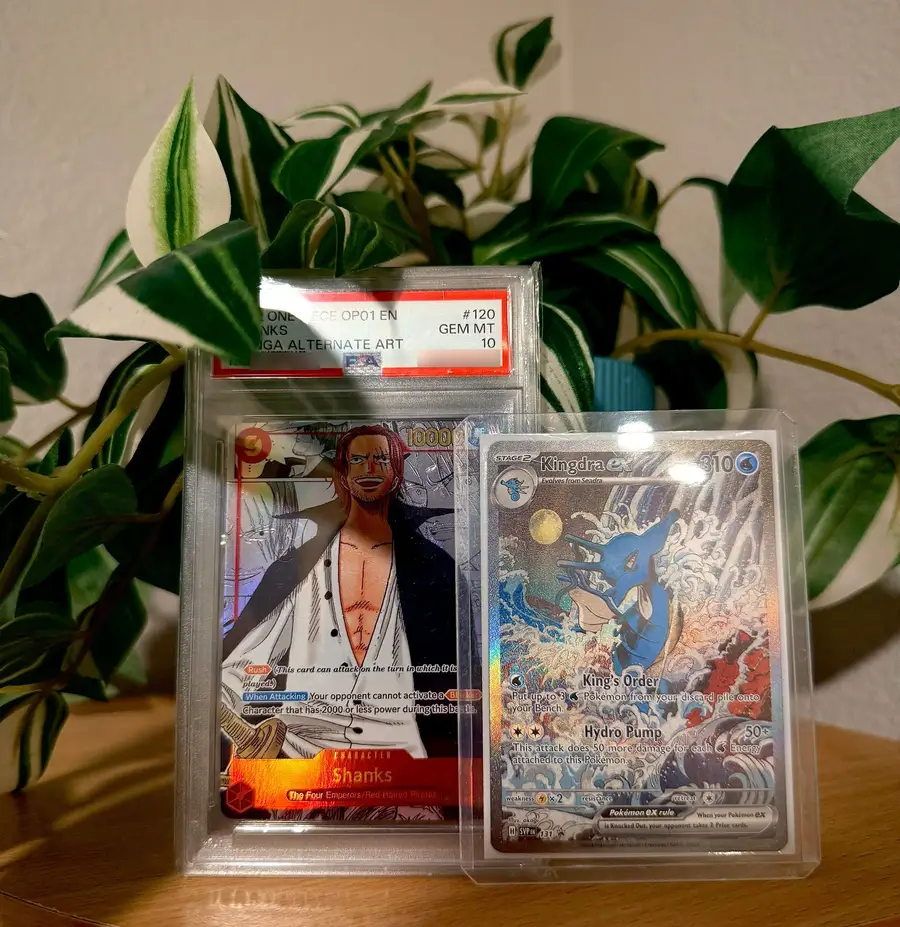
A slab protects the card inside, but the case itself can scratch and crack. A fitted slab sleeve keeps the case clear. Stand slabs upright in a box made for them, not stacked loose in a bag.
Taking cards to a show
Carry trade cards in a binder, or in sleeved toploaders inside a closed box, and keep it all in a bag that zips. Your first card show has a packing list. When someone asks to see a card, it's normal to hand it over in its sleeve and to expect the same back.
The card condition guide explains how wear is described, and raw vs graded cards shows how condition and grades change a price. If you don't know which cards deserve a toploader, the Pokémon card price pages list a daily market price for each card in a set.
Quick answers
Should a card go in a sleeve before a toploader?
Yes. A bare card can scratch as it slides into a rigid holder. Soft sleeve first, then the toploader.
Are binders safe for cards?
A good one is. Look for side loading pockets made without PVC, don't overfill the pages, and store the binder so the pages aren't squeezed or bent.
Why do my holo cards curl?
The foil layer reacts to moisture in the air differently from the card stock, so holo cards can bend as humidity changes. A steady, dry room and a sleeve help.
Popular sets: Prismatic Evolutions, 151, Destined Rivals, Evolving Skies, Base Set. Look up a card on the Pokémon card price pages, the One Piece card price pages or the Riftbound card price pages, and read how Bartr prices cards. Bartr is an information tool, not financial advice. See the Terms of Use.
Bartr keeps a list of the cards you own with a dated market price for each, so you know which ones to sleeve first.
Get the app, or try the trade calculator in your browser first. Neither needs an account.