
Short version: Know exactly which card you want, down to the set, number, printing and condition, and decide your price at home. At the show, walk the whole floor once, ask vendors for what is not on display, and check the card before you talk price.
A show floor is full of cards you did not come for. The trick is a short list and a plan for each one.
Know the exact card
"A Charizard" is not a card. A set, a number and a printing are. Holo, reverse holo, 1st Edition and a Japanese print of the same card all sell separately, and a vendor will happily sell you the one you did not mean. The printing checklist fits the checks on one page, and how to read a Pokémon card shows where the number and set symbol sit.
Decide what you will pay
Look up recent sales, not listings, and pick the most you would pay for each card in the condition you want. The Pokémon card price pages and the One Piece card price pages show a dated market price for each printing. Sold price vs asking price explains why listings run high. Write the number down.
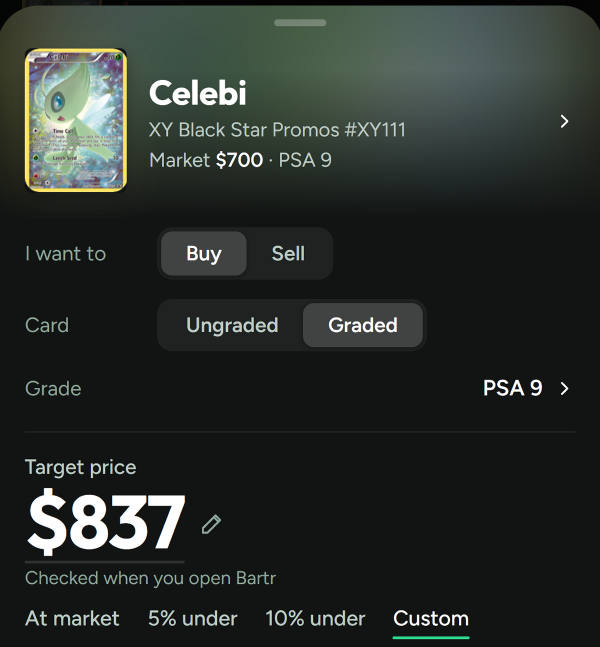
In Bartr this is the Watchlist. Each card gets a target price, and the list sorts so the cards closest to your price come first.
Work the floor
Do one quick lap before you buy. Bigger tables with glass cases usually hold graded cards and singles worth more; smaller tables and collectors trading in open areas are where binders and boxes turn up. Note who has what, and for how much, then go back.
Ask at every table that fits your list. Most vendors carry far more stock than they can show, and the card you want may be in a box under the table. Be specific about the card and the condition.
See who has your wants before you go
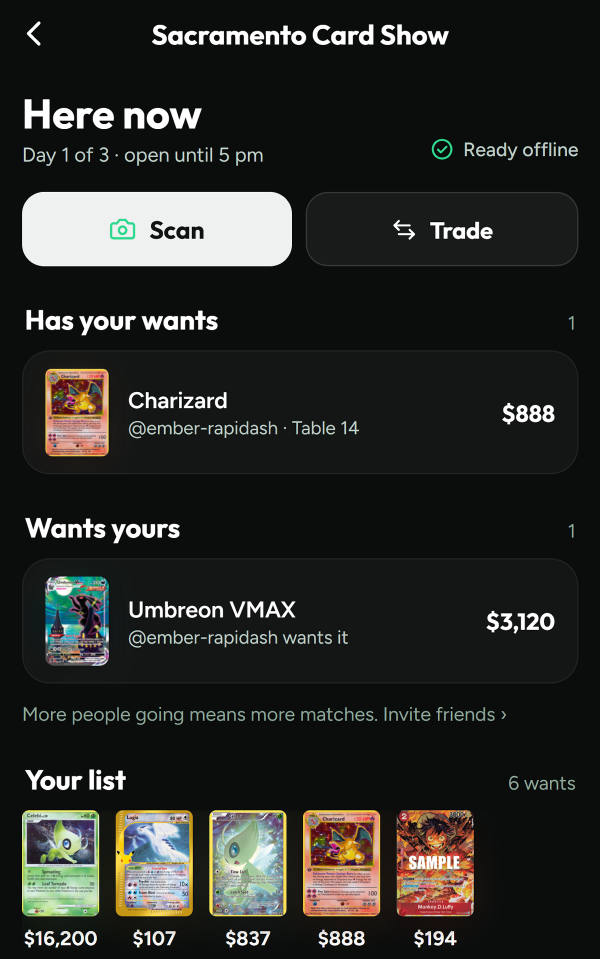
This is where Bartr helps most. When you mark yourself going to a show, your Watchlist becomes what you are hunting, and other people going share theirs under a generated @name, never a real one. On show day, Has your wants shows who has a card from your list, at which table, with their price or Ask.
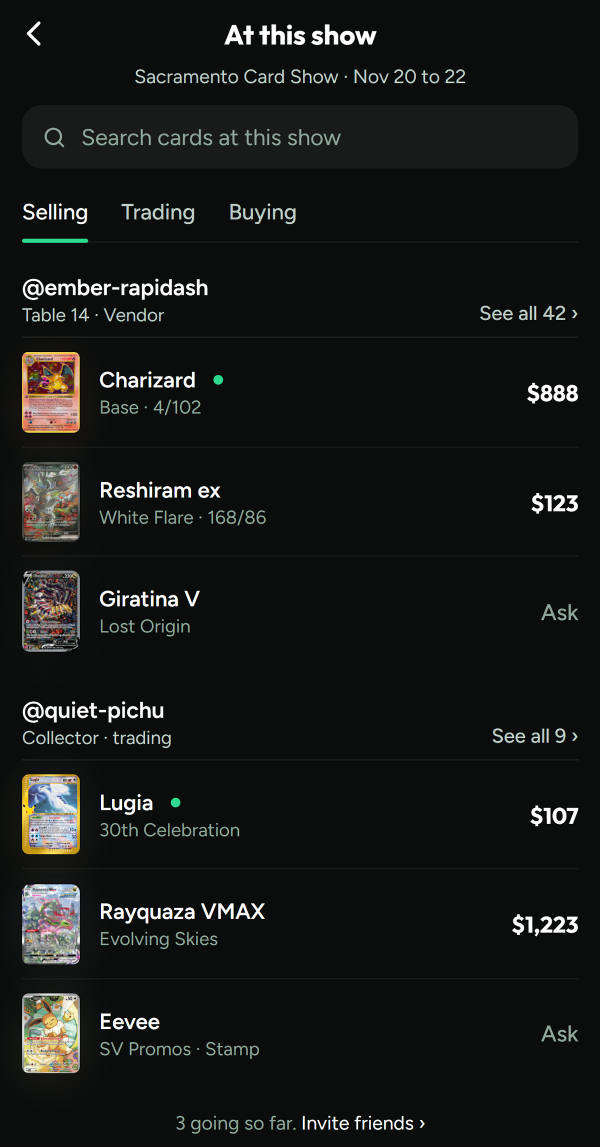
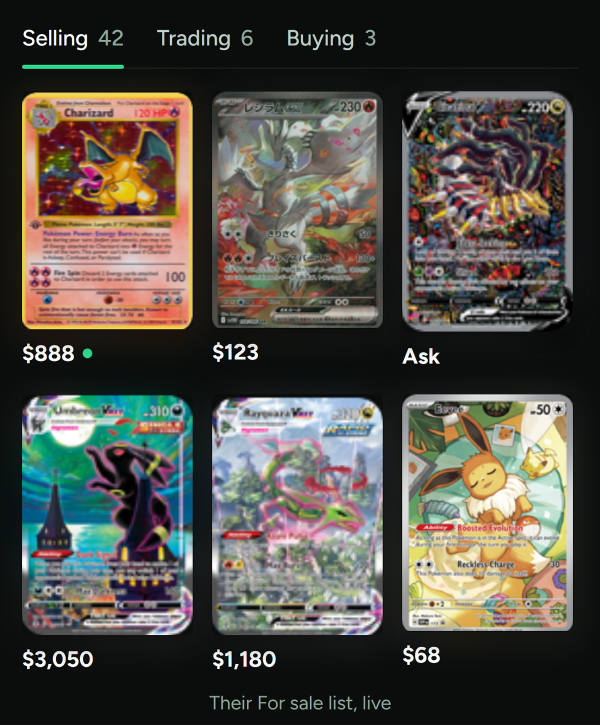
At this show lists the cards everyone going has put up, by Selling, Trading and Buying, with a search box. Open a person to see their whole list.
Check the card before the price
Ask to see it out of the case. Look at the corners, the edges, the surface under a light and the back. Agree on the condition first, using the words in the card condition guide, and only then talk price.
Step by step
1. Name each card exactly
Write the set, the card number, the printing and the grade or condition you want. That is what you will say at every table.
2. Set your price before you see theirs
Look up recent sold prices and write the most you would pay. A target set at home keeps a nice case from setting it for you.
3. Walk the whole floor once
Do a quick lap before you buy anything. Note which tables have your cards and what they ask, then go back to the best one.
4. Ask at every table that fits
Say the card, the set and the condition you want. Vendors keep far more in boxes and binders under the table than in the case.
5. Check the card, then talk price
Look at the front, the back and the edges under good light first. Agree the condition, then agree the price.
Once you have found it, the next question is often a trade, not cash. That is the subject of the guide on fair trades at card shows.
Quick answers
What is the best time to go to a card show?
Early for the best choice, because the cards people want go first. Later in the day is quieter, and some vendors are more open to a deal, but the card you want may be gone.
How do I ask a vendor if they have a card?
Be specific: the card name, the set and the condition you want. "Do you have the Base Set Charizard, unlimited, near mint?" gets a straight answer. "Any Charizards?" gets you a binder.
Are card show prices negotiable?
Usually, a little. A polite offer close to the sticker is normal. Buying a few cards together often gets a better price than haggling over one.
How do I know if a price at a card show is fair?
Compare it with what that exact card, in that condition, has been selling for lately. An asking price online is not the same thing as a sold price.
Look up a card on the Pokémon card price pages or the One Piece card price pages, and read how Bartr prices cards. Bartr is an information tool, not financial advice.
Bartr matches your want list against the people going to the same show, so you can see who has your cards, and at which table, before you walk in.
Get the app, or try the trade calculator in your browser first. Neither needs an account.