
Short version: Sort before you look anything up. Pull out the cards likely to sell on their own, price those one at a time, and count the rest as bulk. In most collections a small share of the cards holds most of the value, so that's where the time should go.
This works for a binder, a shoebox or a closet full of boxes, in Pokémon, One Piece or Riftbound. For one card on its own, how much is my Pokémon card worth? goes step by step.
Three piles
- Look up: holos, full art cards, anything with more than a plain rare symbol, promo cards, old cards, and anything graded.
- Maybe: plain rares, reverse holos, and popular characters you aren't sure about.
- Bulk: commons, uncommons and basic Energy.
The rarity mark at the bottom of each card does most of the sorting. Pokémon card rarity symbols explains the marks, and One Piece card rarities does the same for that game. Give old commons a glance before they go in the bulk pile. Cards from the earliest sets, and first edition and shadowless cards, can matter at any rarity.
Price the first pile card by card
For each card, match the set, the number and the finish, then read a recent market price. How much is my Pokémon card worth? has the steps. The Pokémon card price pages list each set in number order with a daily market price, which is quick when the pile is already sorted by set. There are One Piece and Riftbound price pages too.
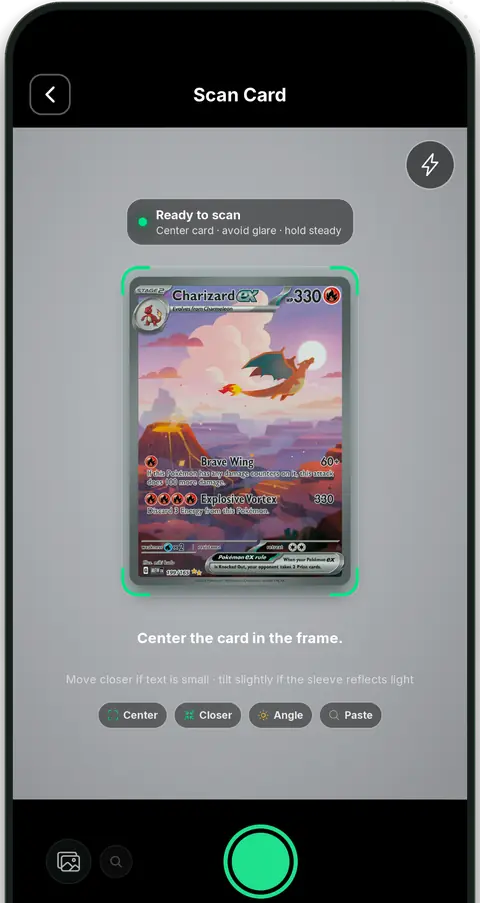
Scanning beats typing. A scanning app reads the card from a photo, so you only have to confirm the printing. Either way, double check the printing on anything that comes back high. One wrong match can throw off the whole total.
Mark down for condition
A market price usually assumes a Near Mint copy. A card with whitening, scratches or a crease sells for less, sometimes far less. You don't need to assess every card. Note the ones with clear wear and treat their prices as a ceiling. The card condition guide shows what to look for.
Spot check the maybe pile
Look up a handful. If they all come back low, the rest of the pile is bulk and you can stop. If a few surprise you, keep going through cards like those. This is the step that saves the afternoon.
Count the bulk
Bulk is priced by the count, not by the card. Buyers usually pay a flat rate per card or per box, and the rate differs from one buyer to the next. Don't count by hand. A full row in a standard card storage box holds a known number of cards, so count rows.
Keep holos and reverse holos out of the plain bulk. Many buyers pay a different rate for them.
Write down a dated total
Add up the first pile, note the bulk count beside it, and put the date on it. Prices move, and a total with no date is hard to trust a few months later.
Graded cards get their own line. A slab is priced by the company and the grade on its label, in a different market from raw cards. Raw vs graded cards explains why.
What the total means
It's an estimate of what collectors have been paying each other for those cards. It isn't an offer, and it isn't what a buyer would pay for the whole lot at once.
A shop or vendor pays a share of market, because they resell; how vendor trade-in rates work has the arithmetic. Selling card by card gets closer to market and costs time, fees and postage, and how to sell Pokémon cards compares the options. Asking prices aren't sales either. Sold price vs asking price shows the gap.
Keep the list when you're done. Next time it's a quick update, and it's handy if you ever trade, sell or need to describe what you own. Then put the first pile somewhere safe. How to store and protect cards covers that.
Quick answers
What is the fastest way to price a Pokémon card collection?
Sort first. Pull out the rares, holos and older cards, price those one at a time, and count the rest as bulk.
How is bulk priced?
By the count. Commons and uncommons are usually bought together at a flat rate per card or per box, and the rate differs from buyer to buyer, so ask.
Is the total what I would get if I sold everything?
No. A market total adds up what collectors pay each other for each card. A shop buying the whole lot pays less than that, and selling card by card takes time and has fees.
Popular sets: Prismatic Evolutions, 151, Destined Rivals, Evolving Skies, Base Set. Look up a card on the Pokémon card price pages, the One Piece card price pages or the Riftbound card price pages, and read how Bartr prices cards. Bartr is an information tool, not financial advice. See the Terms of Use.
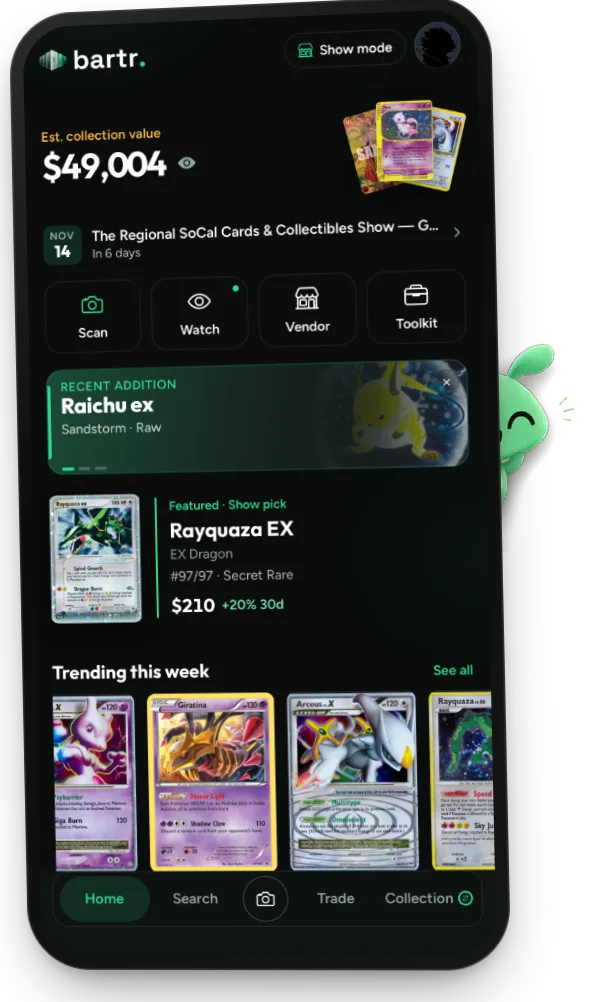
Bartr is built for this. Scan cards into your collection and each one gets a dated market price, with a running total at the top. Cards with no reliable price are left out of the total, not guessed.
Get the app, or try the trade calculator in your browser first. Neither needs an account.