
Short version: Start small and regular: a room you can use again, a handful of tables, a set night each week or month. Write simple rules for vendors and guests, list the event where local collectors look, and keep to the times you post. A small night that happens every month beats a big one that happens once.
Most local scenes start with someone booking a room and asking a few vendors to bring a table. You do not need a convention hall.
Venue and date
Good first venues are a game store, a card shop with spare floor, a library or community room, or a hall that rents by the hour. Check the basics before you book:
- Enough tables and chairs, and good light to look at cards under.
- Power for card readers and phone chargers.
- Parking, restrooms and somewhere to queue at the door.
- Whether the venue allows selling, and whether it needs event insurance.
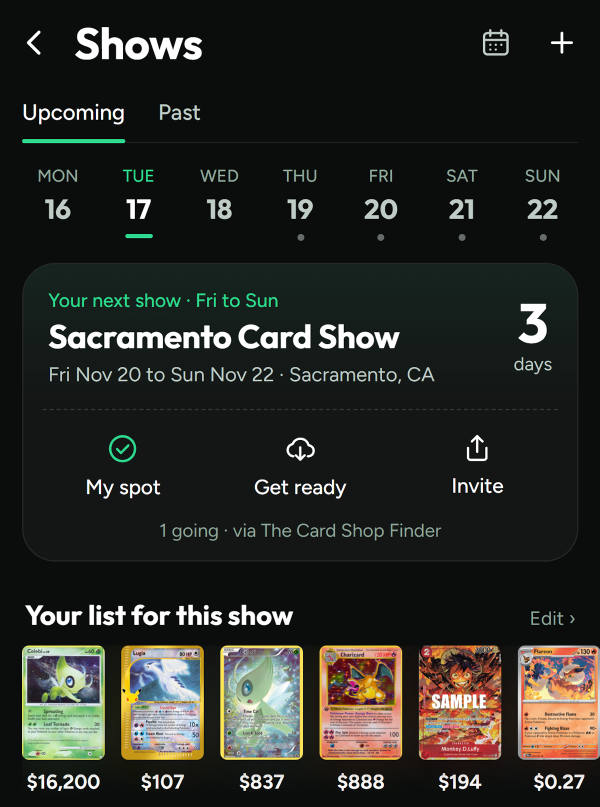
Choose a regular slot, like the first Saturday of the month or a weeknight evening, and avoid the dates of bigger shows nearby. The Shows tab in Bartr shows the shows coming up near you, with details via The Card Shop Finder, which is a quick way to check for a clash.
Vendors and tables
Decide how many tables you have, whether vendors pay for them, when setup starts and when tables must be packed away. Many small events keep table fees low or free at first. Ask local shops and people who sell at bigger shows nearby. Write down who has which table.
Point new vendors at the guide on how to price your table and at the Pokémon card price pages; tables with clear prices make the whole room feel easier to buy from.
House rules
Post a few rules at the door and in the listing:
- Trades and sales are between the two people making them.
- Ask before handling anyone's cards.
- No fakes, proxies sold as real, or resealed product.
- Be kind to new collectors.
Point new traders at the guide on fair trades at card shows, so the room shares an idea of what fair means.
Get the word out
Tell people where they already look: the host store's posts, local collector groups, flyers at nearby card and game shops, and a show listing site. Listing your event on The Card Shop Finder also puts it in Bartr's Shows tab. Bartr does not list shows itself; shows in the app come from those listings.
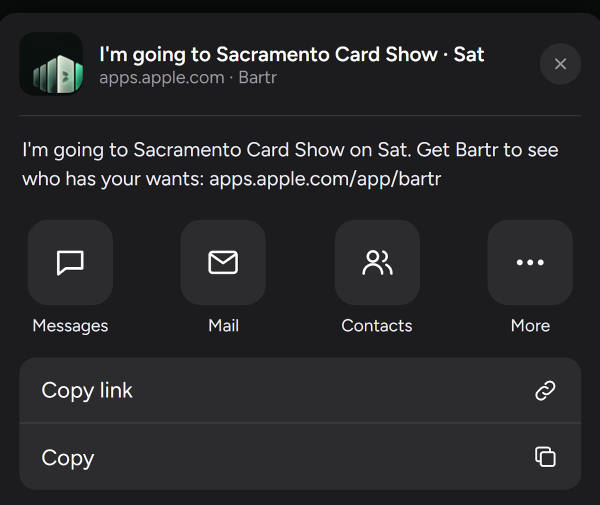
Once it is listed, people can tap I'm going, share their wants and their trade stack under a generated @name, and invite friends with a message and a link to the app.
On the day
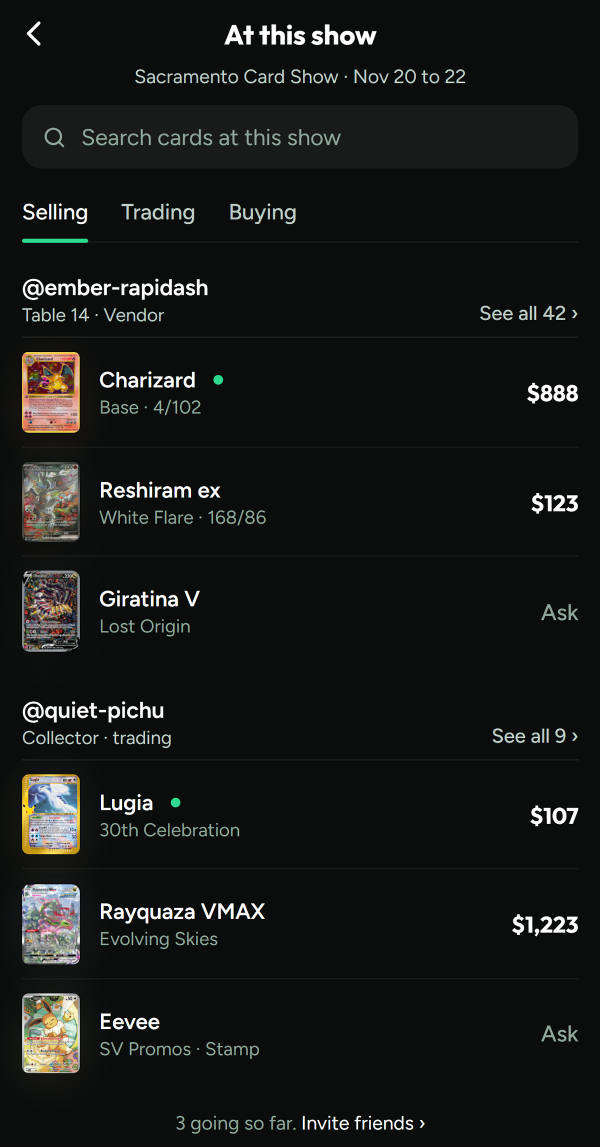
Arrive early to set tables and a sign at the door. Have someone greet people and take any entry. Keep your vendor list handy, walk the room now and then, and finish when you said you would. People going in Bartr can open At this show to see the cards everyone has put up, which helps a small room trade more.
Step by step
1. Pick a venue and a regular date
A game store, a community room or a hall you can use again. A monthly or weekly night builds a crowd faster than a one off.
2. Set the rules for vendors and guests
Decide table count, any table fee, setup time and what is not allowed, like fakes and resealed product, and write it down.
3. List the event and spread the word
Post it where local collectors look: the store, local groups, flyers at nearby shops, and a show listing site such as The Card Shop Finder.
4. Run the day
Arrive early, set tables, greet people at the door, keep a list of vendors, and keep to the times you posted.
5. Follow up and set the next date
Thank vendors and guests, ask what worked, and announce the next date while people still remember this one.
Keep it going
Thank everyone, ask vendors what sold and what did not, and post the next date the same week. The show kit has free printables for tables.
Quick answers
How do I start a card show?
Start small: a trade night at a game store or a rented room with a handful of tables. Pick a regular date, set simple rules, and tell local collectors where they already look.
How much should I charge for vendor tables?
Enough to cover the room and your costs, and no more at first. Plenty of small events charge nothing for the first few nights to get vendors in the door.
Do I need insurance to run a card show?
Ask the venue first. Many venues require event insurance from whoever books the room, and the rules differ by place, so check before you sell any tables.
How do I find vendors for a small card show?
Ask local card shops, people who sell at bigger shows nearby, and regular traders at game stores. A small, cheap table at a regular night is an easy yes for a new vendor.
Look up a card on the Pokémon card price pages or the One Piece card price pages, and read how Bartr prices cards. Bartr is an information tool, not financial advice.
Once your show is listed on The Card Shop Finder, it shows in Bartr, where people going can share their lists and see who has the cards they want before they arrive.
Get the app, or try the trade calculator in your browser first. Neither needs an account.