
Short version: Both are official. They're separate product lines with different card backs, different sets and numbering, different pack sizes and separate markets. Never price a Japanese card from English sales, or the other way round.
Turn it over
The back is the fastest tell. English cards, and most other languages, share one back design. Japanese cards have their own, with a different logo and layout, and the earliest Japanese cards used an older back design again.
A Japanese back is normal. It doesn't make a card fake.
Sets and numbers don't line up
Japanese sets are released first and are usually smaller. An English set often gathers cards from more than one Japanese set, sometimes with extra cards, under a different name. So the same artwork usually has a different set and a different card number in each language.
Look a card up by the set and number printed on the copy in your hand, not by the English set you know it from. How to read a Pokémon card shows where those marks are.
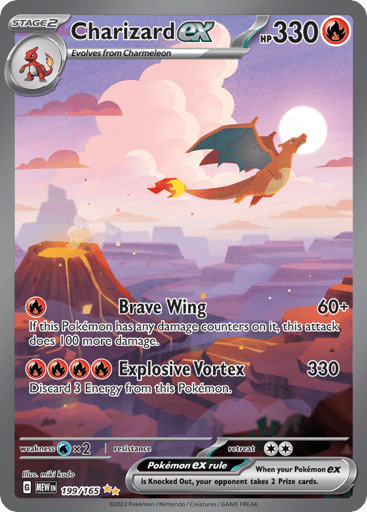

Rarity marks, borders and print
English cards show rarity with symbols: a circle, a diamond, or stars. Modern Japanese cards print letters, such as C, U, R, RR, AR, SR and SAR, and the names don't always line up one to one. Pokémon card rarity symbols lists the English ones.
English cards had yellow borders for many years and moved to the silver border Japanese cards use with the Scarlet and Violet series. That's why older cards in the two languages are easy to tell apart from the front.
You'll hear strong opinions about which line has the better print and card stock. It's a matter of taste, and it varies by era. Judge the card in front of you.
Packs and boxes
Japanese booster packs hold fewer cards than English ones, and a Japanese booster box holds a different number of packs. The counts vary by product, so read the box. Some Japanese products have no English match at all, and the other way round. Booster box vs Elite Trainer Box vs booster bundle covers the English products.
Tournament play
Official events decide which card languages are allowed in each region, and in most places outside Japan, Japanese cards aren't allowed in sanctioned events. Casual games are up to the table. Check the rules before you build a deck around cards in another language.
Prices are separate
This is the one that bites at a trade table. A Japanese card and its English counterpart are bought and sold by different groups of collectors, in different numbers. Either one can be the more expensive, and the gap can be large in both directions.
We keep the two apart here. There are English Pokémon card price pages and Japanese Pokémon card price pages, each with its own daily market price. When a Japanese card has too few sales to be sure, the price is left blank.
The same goes for Korean, Chinese, German, French, Italian, Spanish, Portuguese and the rest. Each language is its own market, so match the language before you compare a price.
Checking a Japanese card
Match the set and number printed on the card, then the finish, because holo and non-holo copies are separate cards in Japanese sets too. Condition works the same way in every language, so the card condition guide applies. If something looks off, compare it with a known real copy. How to tell if a Pokémon card is fake lists the checks.
With both languages on the table, say which is which out loud before anyone talks numbers. How to value a card trade explains why the printing has to match first.
Quick answers
Are Japanese Pokémon cards real?
Yes. They're official cards made for Japan, where the card game began. They're a separate product line from English cards, not copies of them.
Are Japanese Pokémon cards worth less than English ones?
Neither language is always worth more. Each has its own buyers and its own sales, so the same artwork can sell for more in one language than the other. Look up the exact card.
Can I play with Japanese cards at a tournament?
Usually not outside Japan. Official events set which card languages are allowed in each region, so check the rules for your event.
Popular sets: Prismatic Evolutions, 151, Destined Rivals, Evolving Skies, Base Set. Look up a card on the Pokémon card price pages, the One Piece card price pages or the Riftbound card price pages, and read how Bartr prices cards. Bartr is an information tool, not financial advice. See the Terms of Use.
Bartr scans Pokémon cards in English and in Japanese and prices each from its own market, so the two never get mixed up in a trade.
Get the app, or try the trade calculator in your browser first. Neither needs an account.