
Short version: The letters next to the card number are the rarity: C, UC, R, SR and SEC, with L for Leader cards. Many cards also come as a parallel with different art, which keeps the same number and letters and is priced separately. So the number alone won't tell you which version you're holding.
Prices by set are on One Piece card prices. For Pokémon's symbols, see Pokémon card rarity symbols.
Where to look
Bottom right corner of the card. The card number looks like a short set code, a dash and a number, and the rarity letters are printed right beside it.
The standard rarities
- C, Common. The cards you see most in a pack.
- UC, Uncommon. A step up, still easy to find.
- R, Rare. Scarcer than the two below it.
- SR, Super Rare. The big characters and strong cards of a set.
- SEC, Secret Rare. The top standard rarity. A set has only a few.
- L, Leader. Every deck is built around one Leader card. L marks the card type, and it stands where the rarity goes.
Some sets add other marks, such as SP for special cards and TR for Treasure Rare, and promo cards are marked P. If the letters on your card aren't here, look the card up in the official card list for its set.
Reading the card number
The letters at the front name the product the card belongs to. OP is a main booster set, ST is a starter deck, EB is an extra booster, PRB is a premium booster and P is a promo card.
The digits after the letters number the set, and the digits after the dash are the card's place in it. Read the whole code. The same character turns up in different sets at very different prices.
Parallels and alternate art
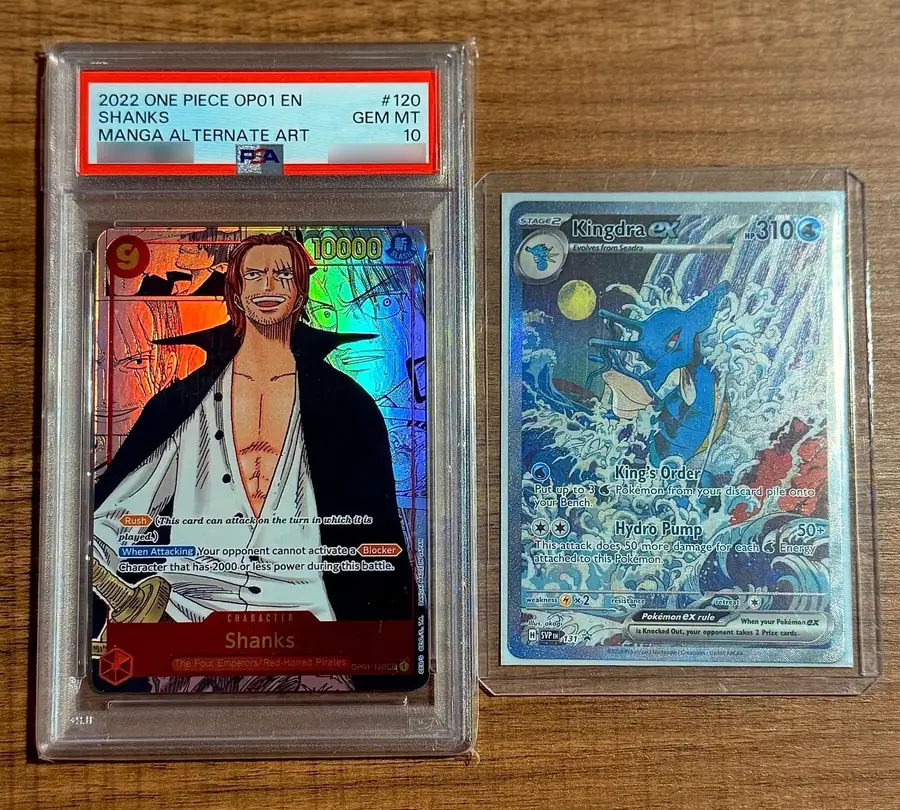
This is the part that catches people out. Many One Piece cards exist in two or more versions: the regular one, and a parallel with different artwork, a different finish or both. The parallel keeps the same card number. It keeps the same rarity letters too.
So compare the artwork with the regular version in the official card list. If the picture is different, or the art runs to the edges, you likely have a parallel.
Collectors have a few names for these. Alternate art is the general one. Manga art usually means a parallel with comic panels in the background. The names are informal, so match the picture and ignore the nickname.

Special cards and reprints
Special cards, marked SP, are new versions of cards from earlier sets, found in later booster sets. They keep the card number of the original set, so the set code on the card may not match the box it came from. Treasure Rare, promo, prize and event cards are separate printings again, often with a stamp or a different finish.
Language
One Piece cards are printed in Japanese, English and other languages, and each language has its own market. A Japanese copy and an English copy of the same card number are different cards for pricing. Say which one is on the table before you compare numbers.
Rarity is not price
The letters say how often a card appears in packs. A parallel of a popular Leader or Super Rare can sell for far more than a Secret Rare from the same set, and plenty of Rares sell for very little.
To find a price, match the card number, the version and the language, then look at what copies sold for. The One Piece card price pages list each set with a daily market price and keep each version as its own entry. Sold price vs asking price explains why to use sales and not listings.
Before a trade
Read the full card number on both cards, then settle the version: regular or parallel, and any stamp. The printing checklist is a short version for the table.
Agree on condition next. The card condition guide uses Pokémon cards for its examples, and the same words apply here. Then compare both sides the same way. Is my trade fair? works an example, raw vs graded cards covers slabs, and how to store and protect cards covers keeping them in the condition you got them in.
Bartr is not affiliated with, endorsed by or sponsored by Bandai or the One Piece Card Game. Card names belong to their owners.
Quick answers
What does SEC mean on a One Piece card?
Secret Rare, the highest of the standard rarities in a One Piece booster set. It sits above Super Rare, which is marked SR.
What is a parallel card in One Piece?
Another version of a card with different art or a different finish. It keeps the same card number as the regular version and is priced as its own card.
What do the letters at the start of a One Piece card number mean?
They name the product the card comes from. OP is a main booster set, ST is a starter deck, EB is an extra booster, PRB is a premium booster, and P is a promo card.
Popular sets: Prismatic Evolutions, 151, Destined Rivals, Evolving Skies, Base Set. Look up a card on the Pokémon card price pages, the One Piece card price pages or the Riftbound card price pages, and read how Bartr prices cards. Bartr is an information tool, not financial advice. See the Terms of Use.
Bartr scans One Piece cards and shows a dated market price for the exact version. Tap a card to switch between the regular one and a parallel if the scan picked the wrong one.
Get the app, or try the trade calculator in your browser first. Neither needs an account.